Open All Hours
Are you just about to put in your online shopping order to Tesco or Sainsbury’s ?
Or are you writing your shopping list for your weekly visit to the supermarket ?
Self-service shops first appeared in the 1940’s in some London Boroughs, with a counter for those foods still on ration. Over the years they have got larger and larger and now we can do our weekly shop from our phone, laptop or tablet, or use smart shop and not even speak to anyone else while we pay for our groceries.
Making the journey to a food shop, parking up and pushing a trolley round selecting food is increasingly seen as old fashioned. Imagine then the experience of villagers in Nazeing going about getting their shopping a hundred, or even two hundred years ago.
Life was very different then. Most women’s lives were taken up being wives and mothers at home, organising the kitchen and cleaning as well as looking after the children. No fridges or freezers, just tiny shops often in a lean-to or in a living room. Food also came straight from the farm, garden or was delivered. The trade directories and census records tell us who were providing provisions of all sorts within the different parts of our village. We also have the memories of past villagers, including John William Payne, who came to Nazeing in 1904 aged 7 years old when his father came to work as head gardener at Nazeing Park. He left to go to war in 1914. So, we can date precisely his reminiscences.
John William Payne
He only spent his childhood in our village. His memoires, written when he was 89 years old were divided into different topics, one of which was ‘How did we shop?’:
“The Baker, the Grocer and the Butcher delivered goods to the house. No doubt a greengrocer visited the village, but in our case only oranges, tangerines and bananas were purchased, probably from the grocer. Father supplied from the large walled garden every kind of vegetable and fruit. Apples, pears, plums, peaches, nectarines, were all grown outside on the walls and in the open garden and figs and grapes were grown in the glasshouses. Then, of course, there were strawberries, raspberries, currants –black, red and white – quinces for flavouring apple tarts and jam, and even medlars from two trees which stood on a lovely little lawn in front of the house and beside the house was a mulberry tree.
Mother made all sorts of jam including pear and peach and, of course bottled fruit for use out of season. We had beautiful salads throughout the year and I was so used to all these lovely things that I did not appreciate them one little bit. Would that I could be served with them now!”
The above, of course, did not apply to all, but villagers made good use of their gardens for growing fruit and vegetables, and most houses and cottages had their plot of land for this purpose; often part of this land was used as a chicken run. Many of the smaller as well as the larger houses had fruit trees and bushes for their own use.
Upper Town
In Betts Lane George Fairchild was listed as the shop keeper (general dealer) and Post Office from 1847 to 1863. This was at the house we now know as Fair View Cottage.
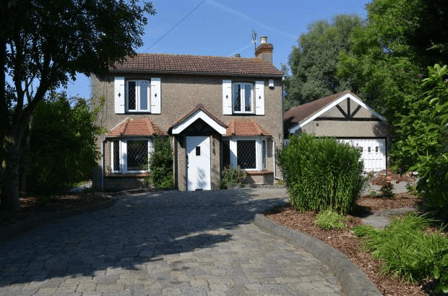
Fairview Cottage, Betts Lane – site of the first Post Office / General Store 1847 -1863
By 1891 the Post Office had moved to Moat House, by the entrance to Nazeing Park. David Cook was listed as the sub postmaster.
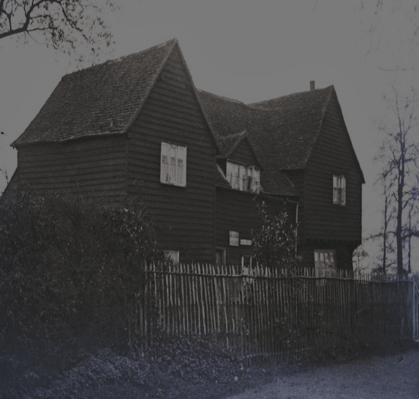
Upper Town Post Office circa 1900
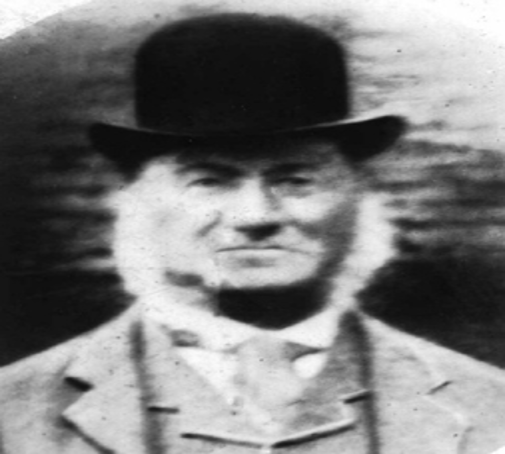
David Cook – shoemaker and sub postmaster
The small post office continued to trade in this house, known latterly as “The Old Post Office”, run by the Starling family from 1909 until 1972 when 67 yr old Adelaide retired.
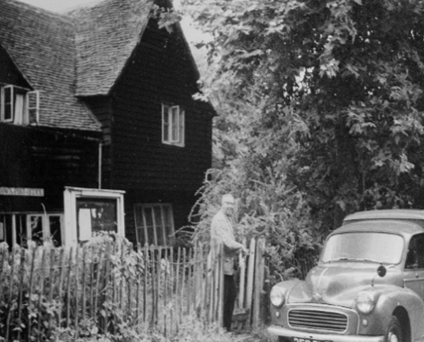
Upper Town Post Office, postman collecting the post circa 1970
I remember being served from a kitchen table covered in a green tablecloth in the 500 year old house. The door was unlocked with the cash box sitting on the table. J W Payne also commented on how it could easily have been stolen, but was quite safe.
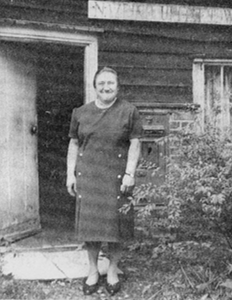
Adelaide Starling outside the Post Office on her retirement in 1972
Pensioners were still collecting their pensions when the post office closed. They then had to go to Bumbles Green or Broadley Common. Now we don’t have a single post office in the village.
The Windmill
Also in Betts Lane, Upper Town, a mill was built in 1802. The millers were also listed as general dealers and grocers. Charles Burton was described in 1881 as a general dealer; the windmill having closed. It had only been operational for about 70 years. By 1891 James Savage was at the Mill House rearing poultry and pigs and listed as a butcher. 1902 Kellys describes him as a general dealer. James and his descendants remained at Mill House for many years. I have memories from the 1960s of going to the stable door of the single-story building to buy cigarettes for my parents, an elderly Miss Adelaide Savage still supplied the locals with sundry items including milk and eggs. There was also a dairy to the rear of the house. Adelaide died in 1970 aged 86, having continued with her little shop till the end of her days.
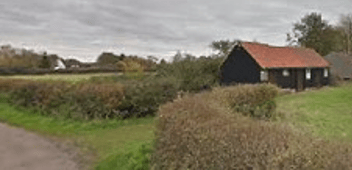
The Mill House in 2012 (google street view, Buttfield in the distance). The windmill stood behind the wooden building. The site has now been developed into a large house with outbuildings.
Bumbles Green
From 1861 -1881 Thomas Pegrum had a grocer’s shop close to the Nazeing Lower Gate. Hannah Hampton also had a grocers shop close by and George Gater was also listed as a greengrocer on the other side of the common at Upper Gate.
These enterprising villagers were joined by John Littlechild who ran his bakery from Coburg Cottage, now Warwick Lodge close to the lower gate. A Henry Spinks, fishmonger, was listed close to the King Harold’s Head.
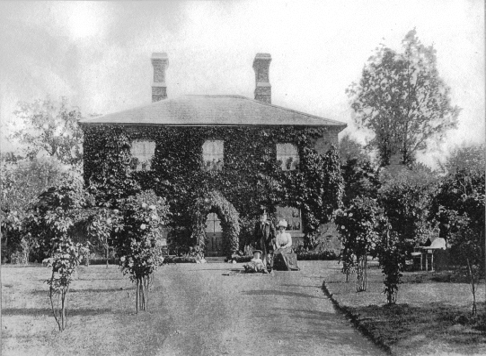
Coburg Cottage circa 1900. The house has a spring to the RHS of this picture which supplied fresh water to the brewery on the opposite side of the road.
By 1891 Frederick Cook was in the newly built cottages in Bumbles Green, run as a Post Office from the lean to on the side of the house. His shoemaker’s workshop was behind the shop. His father David was still at the Upper Town Post Office.
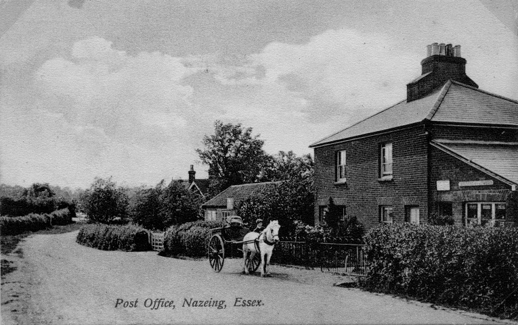
Bumbles Green Post Office circa 1900. The wheelwright’s workshop and school house can be seen before the junction with Middle Street.
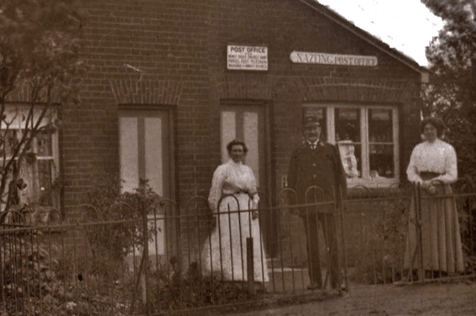
Frederick Cook and his daughters outside the Post Office in the 1920s.
When Frederick Cook’s daughter, Emily Mead, retired as subpostmistress in the 1950s the shop continued to sell sweets and other provisions such as cigarettes and lemonade for a while. Local farmworkers would purchase one or two cigarettes at a time, as their wages would allow.
The Post Office was transferred to the shop close to the Lower Gate which had been taken over by James Brent and his wife Ivy many years earlier. James’ butcher’s shop was on the left hand side and Ivy’s grocers and post office on the right hand side.
J W Payne told us: Our nearest village shop, quite small, was at the top of Belcher’s Lane on the other side of the main road. There one could buy matches, cigarettes, tobacco, cheese, sweets and probably other items.
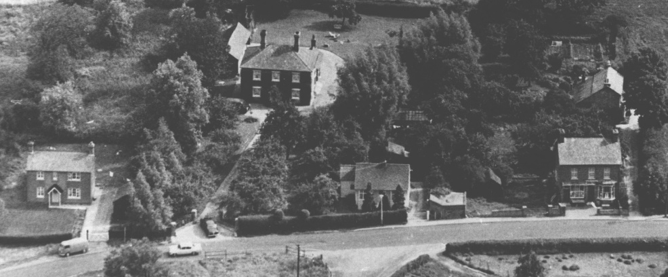
This ariel view of Nazeing Lower Gate was taken in the 1960s. From left to right: Pinders Cottage, Warwick House, Dove Cottage, the stores with Park View behind it.
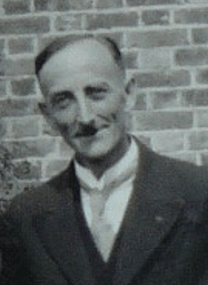
James(Jimmy) Brent, butcher, always wore a wing collar.
Following the death of Emily and her husband Harry Mead in the 1960s the original post office, renamed Cranborne cottages was reopened as a local shop by her nephew and his wife. When the Post Office and stores near to the lower gate closed this shop was the only one in Bumbles Green, before it too closed and became a private residence.
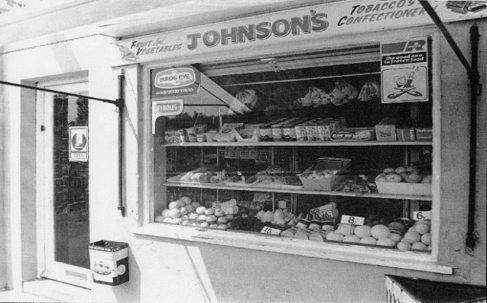
Johnson’s was a typical village shop selling all manner of items and also delivering papers.
Lower Nazeing
Thomas Argent had a general shop at Mayflower in Middle Street in 1851. His daughter Mary Argent was listed in 1891 as “Keeper of Village Provisions Shop”. She died in 1892 and Kelly’s directory of 1894 tells us that John Ashby took over the house and shop with Eliza Annie Ashby listed as Shopkeeper in 1917.
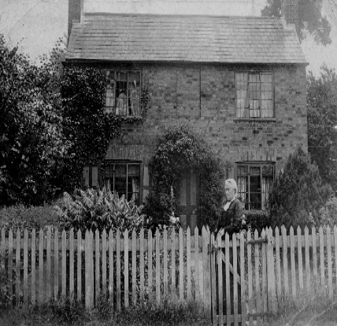
Eliza Annie Ashby, known in the family as “shop grannie”, outside Mayflower in the 1930’s
Frederick Ashby son of John and Eliza Annie took over the shop, which was a lean-to at the back of the house, with his wife and daughter Marjorie, a dress maker in the 1939 register. Marjorie carried on with the shop for wool, sewing threads and other lady’s requisites until she relocated to Nazeingbury Parade when the shops opened there.
Next door to Mayflower, Thaxdene was listed as a Post Office in 1937 run by Charles Drane; this continued as a Post Office and grocer shop until 1992 when it too located to Nazeingbury Parade. The house was renamed Claremont.
On the corner of Hoe Lane and Middle Street at Barnfield was another small shop. In 1921 Alexander Charge was listed as a buyer of Furnishing Fabrics for a merchant in Central London, living with his wife Annie in a new bungalow called Barnfield. In 1937 Kelly’s listed him as a shopkeeper selling toilet requisites and chemical sundries. Connie Mead recalled how she and the other land army girls, who were all girls from London, went to Mr Charge’s shop to buy peroxide to bleach their hair. They went on strike to rebel against the hot conditions in the greenhouses and had time on their hands. After the death of his wife, Alexander moved to London and the greengrocer Leslie Rumsey and his wife Kathleen took over the shop. Leslie had run a mobile greengrocery business for many years.
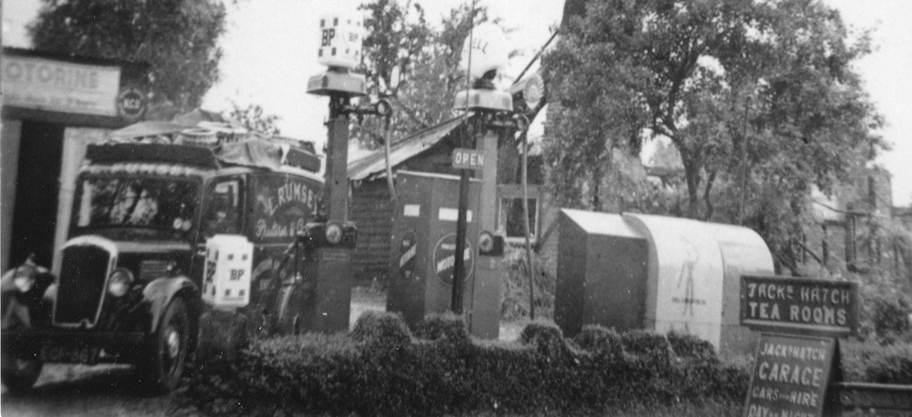
Leslie Rumsey’s van seen at Jacks Hatch Garage and tea rooms in 1939.
In “The Life and Death of Burnt Mill – A collection of memories” there is a mention of Mr Rumsey visiting the school “and selling us carrots with dates stuffed in down one side. They were lovely. You couldn’t get sweets during the war”
Those of you who have read our blogs about the war may well remember the name Rumsey. In November 1944 a rocket landed on the drive of the house in St Leonard’s Road where the Rumsey family lived. Their son Basil was killed along with nine others and the greengrocery van was totally destroyed; some villagers recalled picking up £1 and 10 shilling notes (worth 50p now!) fluttering from the remains of the van. The Rumsey family relocated to Barnfield and ran the green grocers shop for many years. Confusingly on their retirement the shop was taken over by Mr Umsey until finally it closed in 1978.
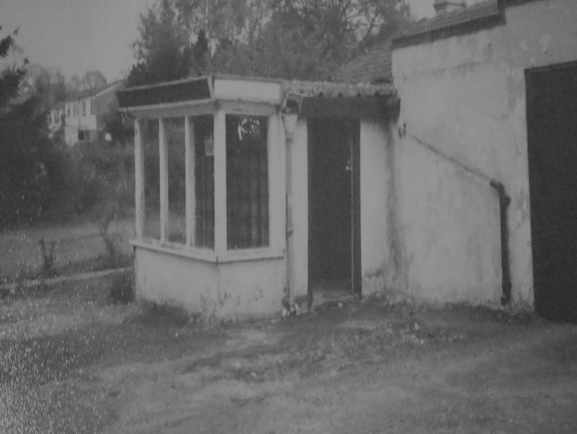
The green grocers shop at Barnfield in Middle Street after its closure in 1978
There was also a shop up North Street, as listed in the 1939 register. Leonard Pearce was a grocer in North Street. This was a general grocers’ shop which served the village for many years run by Mr Squires. When that closed, Mr Fowler ran his General Supply Shop next door. The shop stood in a state of dereliction for many years until Margaret, his widow, died and the site was redeveloped. Two detached houses, nos. 47 and 49 North Street now occupy the site.
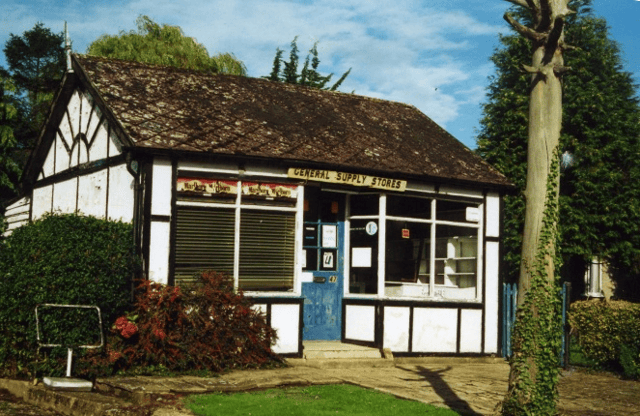
Fowler’s general stores in North Street.
The 1939 register also tells us that there was a dairy next door to the General Supply Stores run by George and Eliza Saunders.
Keysers
With all the new development after the Great War several shops opened up to serve this new community in Keysers. The 1921 census lists just one shop run by 60-year-old Frederick Shaw.
By 1939, Kelly’s trade directory shows three shops. On the corner of Buttondene and Old Nazeing Road John Turton was running the Post Office and a grocer’s shop. Gladys Nash was a hardware dealer at Willow Croft. Henry James Medcalf was also listed as a shopkeeper and as running the Post Office. These three premises were also recorded in 1939 register and the 1945 Electoral Role. Henry Medcalf is at Chez Nous in 1939 and no longer a shopkeeper. Listed next to the Post Office, at Marrion Villa was Frank Jones, a butcher. His wife Mary, his bookkeeper.
In Riverside Avenue at The Hut (now Glenone), Arthur Walker and his wife Annie Louise are both listed as Shopkeeper, Haberdashery in 1939.
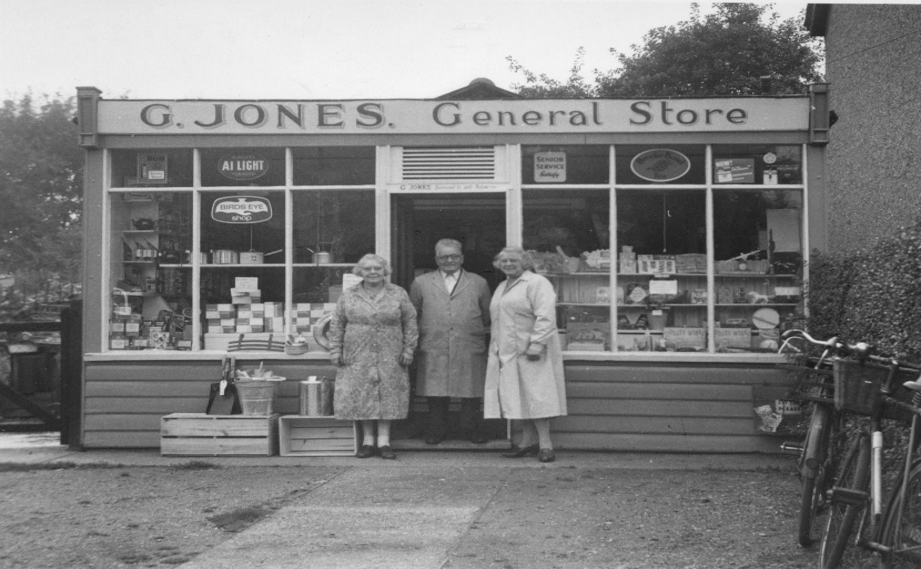
A photo from 1971, the general store sold a wide range of products.
In 1939 There was another General shop run by Kate Maskell at 6 Tatsford Villas, opposite the aerodrome. As well as a tea room run by Henry Gibbons and wife Maria, they were both listed as caterers at a Refreshment Room.
Deliveries
Milk was delivered from the farms by horse and cart, with milkmen following a typical ‘round’ of houses. It was said that the horses would come to know the round so well they’d know where to stop without being told:
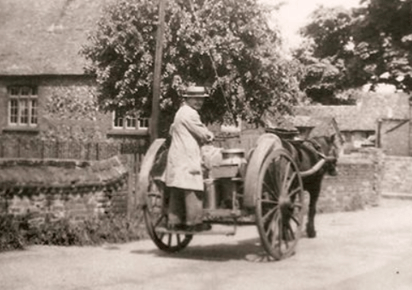
Photo of a typical horse and cart delivery
At the time of WW1, A.J. Pegrum, the midnight milkman from Sturtsbury Farm, in Middle Street, delivered his milk in the middle of the night by horse and cart. Ladling the milk out of a milk churn into a container left out by the resident.
Austin Barrett at Mulberries Farm in St Leonards Road delivered his milk using his motor bike and side car as far as Dobbs Weir before and during WW2. His wife, Nellie, looked after the hens and sold the eggs as well as churning the butter. The son of a previous occupant 25 yr old Sydney Pig was listed in 1921 as milk roundsman working from home.
At Whitehall Farm, in North Street, George Banks, known as Dicky, ran a fishmongers, delivering his wares with his horse. Forty years later the milk man would deliver many other provisions (bread, cakes, fizzy drinks) and milk in reusable glass bottles.
Horses and motor bikes came to be supplanted by a van or milk float. Bakers, fishmongers and butchers would also have their rounds.
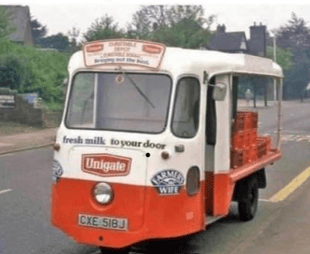
A Unigate Milk Float from the 1970’s
Those who could afford it could have their groceries delivered from Hoddesdon, Epping or Waltham Abbey.
J W Payne recalled:
I remember best the grocer because he called once a week during the evening when I was at home. Turner, Archer & Turner of Hoddesdon were our grocers. Mr Turner the head of the firm, a small man very precise and proper, called at the Park for their order and his younger brother, a jovial and friendly person called on us. They travelled together in a trap in all weather, winter and summer, rain or snow and no doubt called on many village customers. On one occasion the younger brother gave me a present of a golden sovereign (a fortune in those days) as a reward for something I had done at school! By the way it was customary in those days for the supplier to give his regular customers a small Christmas present – generally biscuits or something similar.
In the post war years Archer and Turner continued to deliver basic groceries after the order had been given over the telephone.
The Ration books of Emily Mead tell us that during WW2 she got her meat supplied by Gutteridge of Sun Street. Bacon and fats were provided by Pelling’s of Sun Street, Waltham Abbey. Emily could also buy meat from Jimmy Brent at the Lower Gate shop. Additionally, meat could be bought at Ripley Butchers in Hoddesdon High Street, who delivered even to Upper Town, having been given their order via the telephone.
J W Payne tells us:
Two or three times a year father drove mother into Hoddesdon in a trap to enable her to visit the drapers for materials and odds and ends. She was a skilled needle woman.
During my early years before I possessed a bicycle, I walked to and from Hoddesdon – quite a walk – and as I was frequently troubled by toothache then I had to walk to Hoddesdon and back by myself for an extraction!
As a small boy during school holidays on Tuesday of each week, during the summer, I accompanied my Grandparents, who were small farmers and lived in Belcher’s Lane – again in a trap to Waltham Abbey. Tuesday was market day and I was given a penny to spend during the visit
In Hoddesdon, our nearest town, there were shops of every description each specialising as far as possible in its own products. And in the grocer’s, I remember the tins of broken biscuits, a lot cheaper of course than undamaged ones, but I do not remember any in packets.
We used Paraffin lamps and candles for lighting and coal and logs for heating. During the first 14 years of the 20th Century prices were, I think, more or less static and a rise in wages was truly an event!
As the population increased after WW2, a trip to the market at Hoddesdon on a Wednesday on the 327 bus became the highlight of the week for many. But not easy with a large pram and several young children. So, it was not unusual to walk the three miles or so loading the shopping on the pram.
Nazeingbury Parade
The small shops, serving a variety of items were scattered across the village serving the residents who were not likely to have any form of transport other than possibly a bike. But life was changing in the village, and as more and more houses were built, so was Nazeingbury Parade. This saw the gradual demise of the little shops. At the parade there was a grocers, green grocers, butchers, fishmongers, bakers, chemists, hardware, launderette and newsagents.
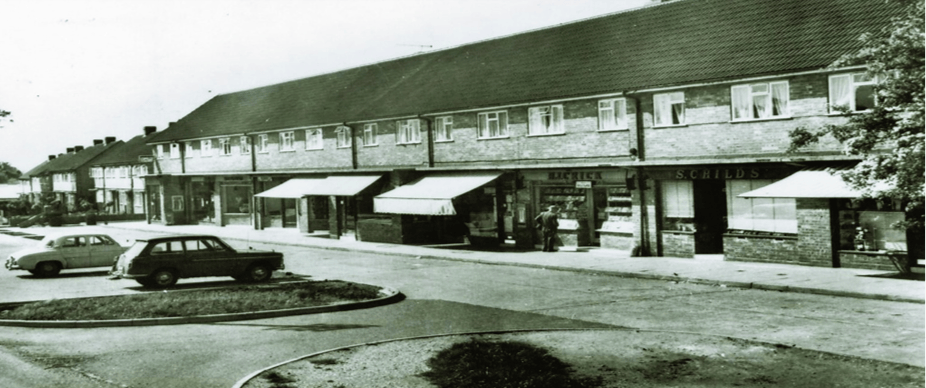
The new Nazeingbury shops, built in the late 1950’s.
The History of Nazeing Part 2 – Seventeen Miles from Town has much more about life in our village during the early years of the twentieth century. You can get your copy for just £10 by following this link. Publications – Nazeing History
Jacky Cooper August 2026

