All Saints Church reveals 1,500 years of Nazeing history
It is not often that an invitation to travel through time is extended, yet that is precisely what All Saints Church in Nazeing offers its visitors.
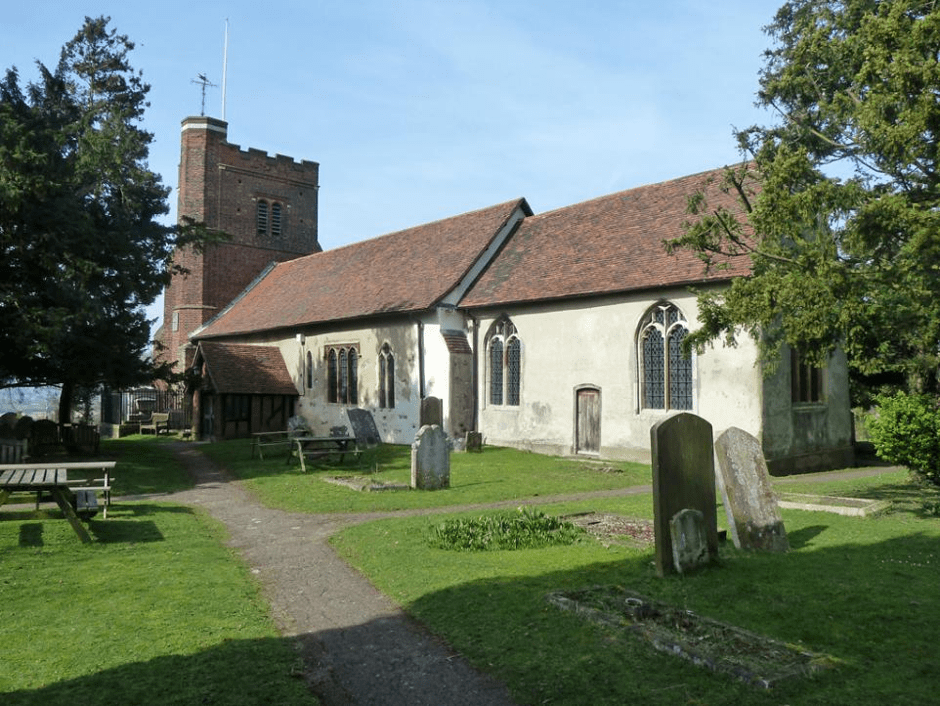
As the Chester Lecture Society has noted, historic buildings “serve as portals to the past… allow[ing] visitors to witness the layers of history embedded in stone, wood, and glass, effectively transporting them to the eras in which the buildings were conceived and transformed (Cannon, 2007).”
Few buildings exemplify that idea more vividly than All Saints, which stands as a gateway to more than 1,500 years of local and national history. The site itself is even older.
All Saints is a Grade I listed building, placing it among the most significant historic structures in the country; only around 2.5% of listed buildings are afforded this highest level of protection.
The foundations of the church as it exists today are thought to date back to the fourth century AD, a time when Britain was still shaped by Roman rule.
For nearly four centuries, Roman law, culture and administration moulded everyday life across the British Isles. However, as the Roman Empire faced growing pressures and began to withdraw its forces, the land entered a period of dramatic change.
What followed – sometimes, somewhat misleadingly, referred to as the Dark Ages – saw the emergence of Anglo‑Saxon kingdoms and the rising influence of Christianity, which had been formally recognised by the Romans in 313 AD.
It was during this period that All Saints was first established. This early church would have been a far cry from the building seen today, described as a plain, oblong structure with an earth floor and a thatched roof.
A more recognisable version of All Saints emerged in the 11th century. Records suggest that part of the nave was completed around 1060, just six years before the Battle of Hastings.
Over the following centuries, the building evolved in line with the needs of its growing congregation. During the 14th century, the north aisle and chancel were added to the Norman nave, leaving architectural clues that still speak to medieval craftsmanship.
The church porch is particularly rich in historic detail. Its floor may date back to the 14th century and contains two medieval coffin lids from the 13th century.
The beams above are etched with graffiti bearing names from the 17th and 18th centuries, alongside one added in 1920.
Carved into the wood are apotropaic marks, commonly known as witch marks, intended to ward off evil. Derived from a Greek term meaning “to turn away”, these symbols were meant to protect both building and congregation.
Among them is the double‑V mark, resembling a stylised W, believed to represent the “Virgin of Virgins” in reference to the Virgin Mary.
Such marks were not purely symbolic. Records show that three residents of Nazeing were charged with witchcraft in 1612. While their fate is unknown, the presence of these marks offers a sobering glimpse into the fears and beliefs of the time.
Later centuries brought further changes, notably during the Victorian era when two major repair programmes were undertaken to preserve the ancient structure.
More recently, in 1999, the Pilgrims Room was added to provide space for social and community events, underlining the church’s continuing role at the heart of village life.
Time travel at All Saints is not confined to architecture alone; it is also deeply rooted in people and stories.
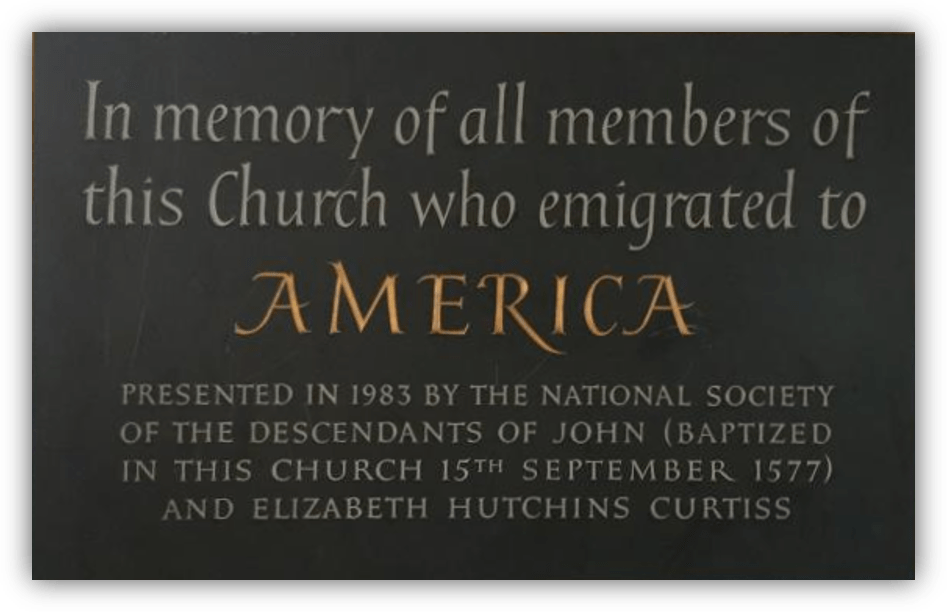
Inside the church, a plaque erected by descendants of the Curtis family records the church’s connection with the ‘New World’ of America.
There is a strong historical link between Nazeing and early colonial America. In 1631, the ship Lyon sailed to New England carrying the Pilgrims. Among them was John Eliot, later known as the ‘Indian Apostle’ in Massachusetts, who spent part of his childhood in Nazeing.
Another passenger, John Curtiss, was baptised at All Saints in 1577 before emigrating, eventually settling in Connecticut.
Today, that connection remains alive. Descendants of the Curtis family continue to research their roots, and visitors from the United States have been recorded visiting All Saints, a powerful and very real example of history bridging continents and centuries.
The churchyard itself offers further journeys into the past.
Among the headstones lies a memorial from the Second World War, recalling one of the darkest days in the village’s history.
On November 12, 1944, a bomb fell in the centre of Nazeing, claiming several lives, including those of children playing in the road.
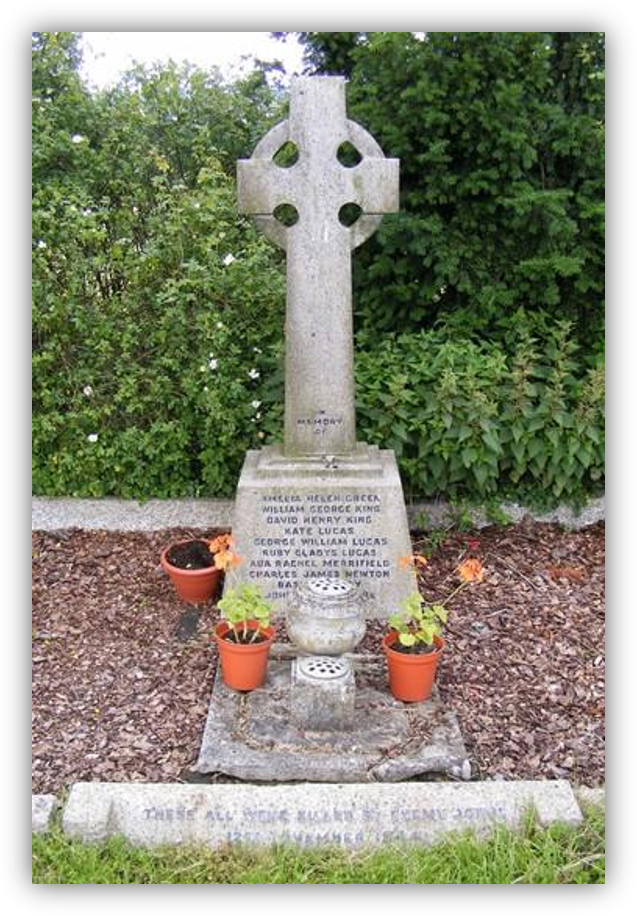
An account by an air‑raid precautions warden vividly describes scenes of devastation and loss.
The Memorial stands as testament to lost lives, including a number of children playing in the road. The Nazeing History Workshop website tells the fuller story, at: nazeinghistory.org/2025/07/03/nazeing-at-war-5/
Today, All Saints Church continues to stand as a monument to shared history, its walls bearing witness to faith, fear, resilience and community across the centuries.
To visit is not simply to admire a beautiful building, but to experience history unfolding through stone, story and memory. In that sense, All Saints remains a true portal to the past, offering the rare and valuable gift of time travel to all who enter.
By Sue Brindley
This article appeared in the Epping Forest Guardian on 25.4.26

