HAROLD’S PARK FARM – Owners and Tenants
The owners of Harold’s Park Farm have included some very colourful characters.
John Mackie
On 29 May 1953 John Mackie, a Scottish farmer with political ambitions in search of a farm nearer Westminster, purchased the farm from the Overland family, He became a popular figure in Nazeing and served as Labour MP for Enfield East from 1959 to 1974. In 1963 he conveyed 502.5 acres to the Central Board of Finance of the Church of England and became their tenant until his death in 1994.
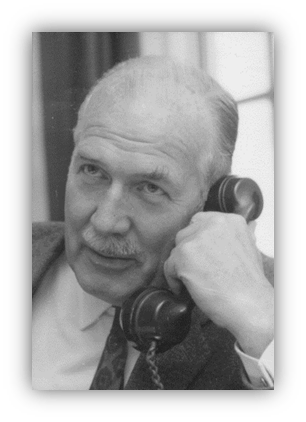
John Mackie bought Harold’s Park Farm in 1953 and farmed there for 40 years.
Marian D’Oyley Bird
Harold’s Park Farm had been owned for 140 years (1780 – 1920) by a Joseph Bird from West Ham, and his descendants. Joseph’s great granddaughter Marian D’Oyley Bird was born in Madras in 1814. Her father, Shearman Bird junior was a senior merchant of the Honourable East India Company in Bengal.
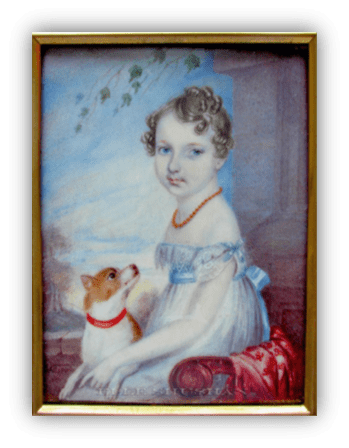
Miniature of Marian D’Oyley Bird, painted by W. Allison, signed and dated 1821.
Marian married James Barlow Hoy in 1831, aged 17. The first of her three husbands. James joined the Royal Artillery and took a posting in India, where he may have met Marian’s family. Whilst James and Marian were in the Pyrenees in 1843, James had a fall and was fatally wounded. On her return to England Marion married Captain Richard Meredith, who had also accompanied the couple on their travels and been a witness at their wedding.
The death duty registers tell us James Hoy was insolvent, as do the village tithe awards of 1847. By the time of the 1859 Poor Relief list Marion had again been widowed and remarried for a third time to John Richard Digby Beste and was listed as the owner of the Harold Park Farm so her financial difficulties must have been resolved.
Beste was a widower with ten children and son of the catholic author Henry Digby Beste. His mother claimed to be descended from Sir Everard Digby of gunpowder plot fame.
In the year after their marriage, Beste and the whole family followed in the footsteps of Charles Dickens and other well-known writers, and set off for America in search of material. His lively account of the family’s travels can now be read online: The Wabash: or Adventures of an English Gentleman’s Family in the Interior of America, published in 1855, and selected by scholars as being culturally important. Wabash(Volume 1): Or, Adventures of an English Gentleman’s Family in the … – J. Beste – Google Books
Louisa Barlow Hoy, the only child of Marian and James Barlow, also published her own account of the trip.
In 1860 Louisa married a Florentine nobleman, Guadagno Guadagni, whose mother was English.
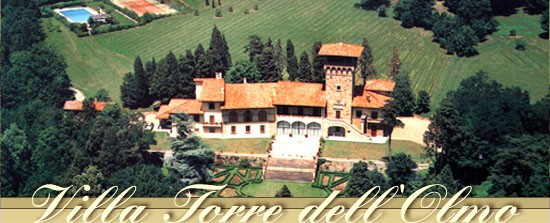
The Beste family bought the Tuscan estate of the villa Torre dell’Olmo, where Marian established a charity school for poor children in the Villa and built a chapel, paying for a resident priest. She provided for it to be continued under her will and, if the school and chapel ceased to exist, the money was to be spent on the nearest Roman Catholic Church to her ‘paternal estate in Essex called Harold’s Park’.
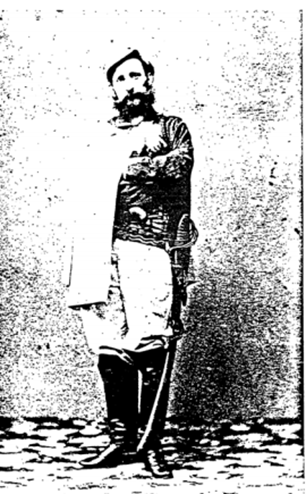
Guadagno Guadagni served as a captain of the Anglo-German Legion in the Crimean War and a general of the Army of the King of Sardinia in the second Italian War of Independence against the Austrian Empire. He had a major role in the victory of Volturno on 1 October 1860, which was an important step in Italian unification.
Louisa and Guadagno had eight children, their eldest Guitto born in 1861 inherited Harold’s Park Farm. In 1915 Guitto Guadagni’s widowed mother-in-law lent hm and his wife Dorothy over £5,000 and became the mortgagee. On 8 March 1920, at a time when the Estates Gazette declared that ‘All England is changing hands’ Guitto Guadagni and his mother-in-law put Harold’s Park Farm up for auction at the Cock in Epping. Harold’s Park passed out of the family after 140 years. Two days later William Graham made the statutory declaration which was the key to unlocking this interesting story.
When Guitto Guadagni sold Harold’s Park in 1920, it was bought by William John Overland and his son William Nelson Overland, who were farmers and cattle dealers at Emneth in Norfolk.
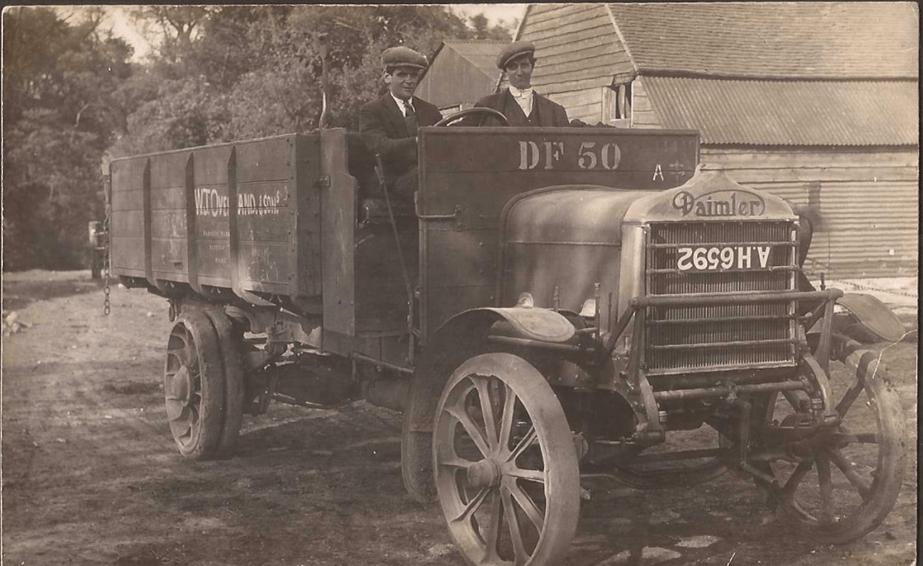
W. J. Overland and son at Harolds Park Farm
Tenants of Harold’s Park Farm
Augustus Balls and Jules Duplessis
Augustus was a great bird fancier and on 20 August 1853 he won first prize at the Great Yarmouth and Eastern Counties Show for his ‘Polish fowl, cock and two hens, black with white crest’ (below). He gave his address as ‘Harold’s Park, Nazing, Essex’. The very next day he died, ten days before his 33rd birthday.
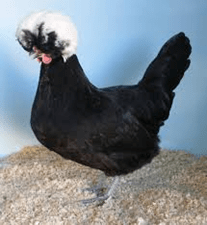
In December 1853 at the Smithfield Club Cattle Show there was an auction of fancy poultry from the celebrated stud of Augustus Balls, Esq. of Nazing, Essex’. Kelly’s 1855 Essex directory lists Mrs Balls as the occupier of Harold’s Park.
The widow of Augustus Balls “of Harolds Park” married a French artillery officer, Jules Duplessis in 1857. He was listed as tenant on the Nazeing Poor Relief Assessment of 1859.
William Graham
In 1886 William Graham became tenant of Harold’s Park Farm, and his testimony forms a legally and historically important part of the 1966 Abstract of Title. He says that on 4 January 1886 he was granted a lease of the property. On 4 April 1892 Graham signed a three-year agreement with the Marchesa Louisa Guadagni, daughter of James Barlow and Marian Hoy and wife of Guadagno Guadagni, Marchese Guadagni de San Leolino. Louisa was in fact Marian’s only blood descendant and from 1895 Graham entered into annual agreements with her and, after her death in 1900, with her son Guitto.
Prior to the arrival of William Graham there was a deep agricultural depression that hit the whole country in the 1870s. The then tenant, Thomas Rippin left the farm in 1875.
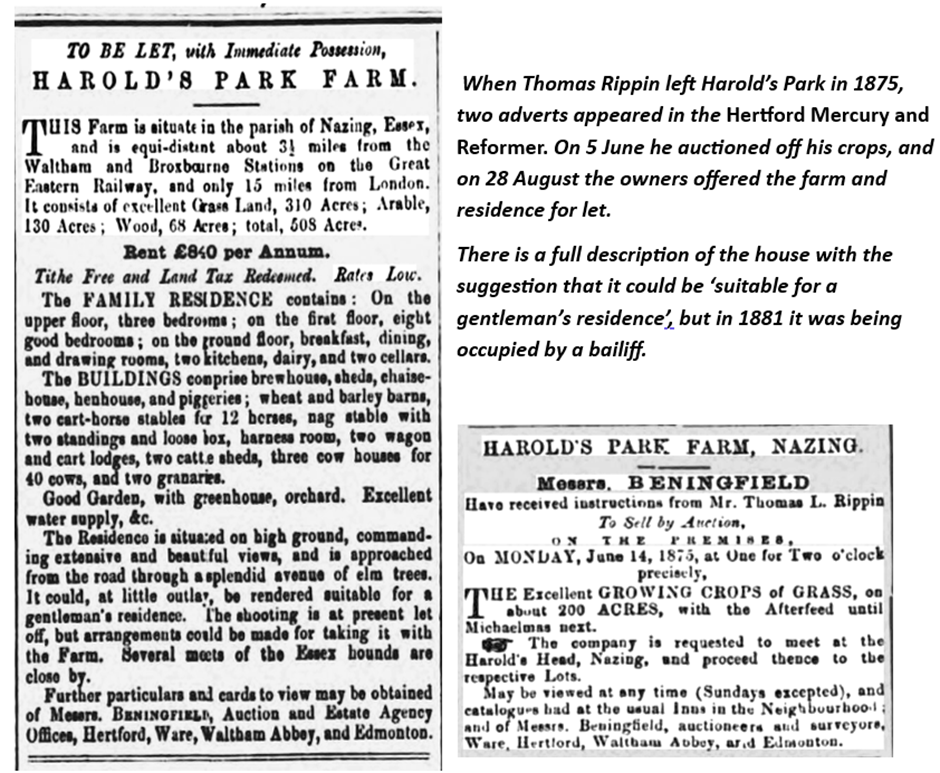
Harold’s Park was described in an 1885 Spectator article as untenanted because it had been ‘brought into such a condition by neglect and bad management’. The owners followed the practice of other Essex landlords and recruited a Scottish farmer, William Graham from Ayrshire. The presence of an experienced and capable young man on the farm meant that its fortunes immediately began to improve, helped by his carrying on ‘an extensive milk trade for miles round’. In 1920 William Graham bought the 240-acre Church Farm from Sir Hereward Wake and in 1924 his elder son David bought Lodge Farm from Archdale Palmer.
If you have enjoyed reading these snippets of information from the History of Harolds Park Farm then why not read the whole story. Send us a message via our contact page https://nazeinghistory.org/contact/
Our final blog on Harold’s Park Farm will show how the farm developed over the years.
David Pracy 2025
 Nazeing History