TWO AERODROMES AND A DOG’S TOOTH
CIVIL DEFENCE
The people of Nazeing were quick to step up and protect their country. According to the British Legion Roll of Honour, All Saints Church Roll of Honour and the Forces voters rolls of 1939 and 1945, just over 200 men and women from the village are known to have served in the forces. Tragically fourteen residents gave up their lives for the country.
Those too old, or too young, served their local community in other ways.
The Observer Corps
The Observer Corps was formed in 1925 as a legacy of the observation posts created during the First World War to spot and identify enemy aircraft. The Police Authorities approached local residents to form an observer post in the village in 1939. The post was positioned on the track from The Duck Pond to Lodge Farm and was visible from the Sun Inn as a silhouette on the horizon. The post had excellent views over the Common, west into Hertfordshire, south towards Waltham Abbey. This vista can be seen in the photo in a previous blog about the dummy airfield.
The group was initially led by Mr W C Cousins, and later Jimmy Savage from Fairlawn, Broadley Common.
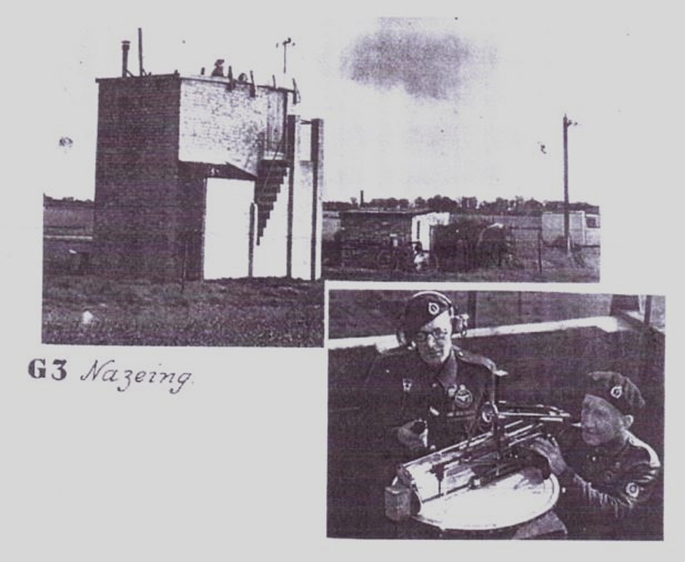
Peter Banson (left) and Jimmy Savage are shown plotting the course of an aircraft in the observer post on Nazeing Common.
This photo below was taken from outside the post on the track from the Duck Pond to Lodge Farm in 1940. They wore an arm band as a uniform and were congratulated on their ability to sort out the fighters from bombers and plot their courses. We can name half of the men in the photo, all volunteers. Can you help us name any others? You can contact us via https://www.facebook.com/nazeinghistoryworkshop or https://nazeinghistory.org/publications/
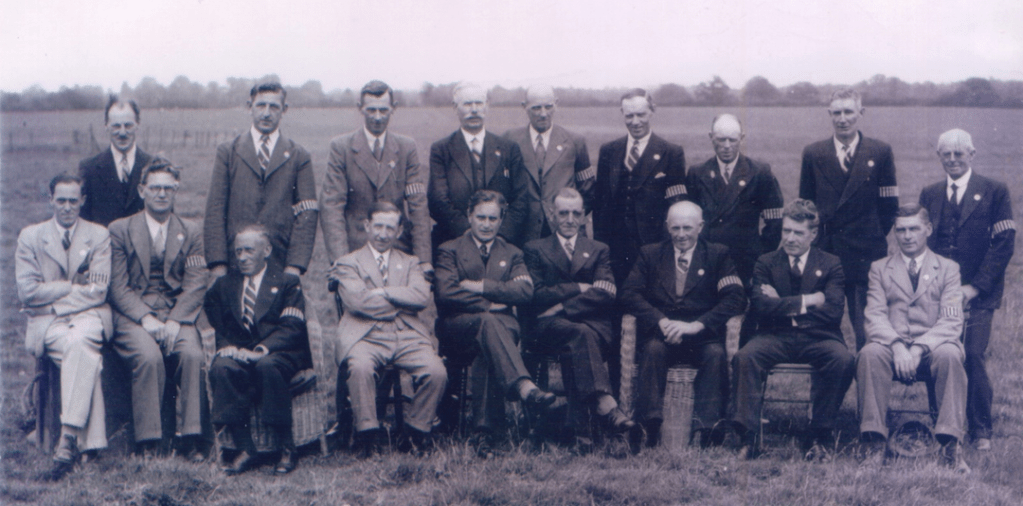
Royal Observer Corps: Back row; Freddy Weir (publican at the Crooked Billet who lost his son to the rocket in our previous Nazeing at War blog), Fred Myson, George Crow, Tillbrook (ex-village policeman), ?, ?, ?, ? Ted Coleman. Front row; ?, ?, ?, Jimmy Savage, ?, Arthur Cordell (chauffer to Palmer), Frank Kingman (farmer), George Rogers (nurseryman), Sid Myson.
Robert Tubby from The Old Sun House told us: The Observer Post was on the side of the track / road from the Golf Club House to Lodge Farm, it’s the sort of tipping edge of the common, all lies below you. One of their jobs would have been to man the telephone, this was the only means of communication …..Observer Corps, they were pros, we ARP’s were amateurs.
Robert also remembered another wartime hazard, though as a child, it was a source of great interest: … very exciting to us kids. Barrage balloons were all around London. They often broke adrift, towing their mooring cable across country. The RAF were sent up to shoot them down, which was great fun to watch. He remembered: a bad one, a balloon dragged its cable across a field of ripe corn. The cable hit power lines and created huge sparks which set light to the fields.
Another story about barrage balloons was related by Bryn Elliot a few years ago: In the hot summer of 1940 officers from Walthamstow were called to action to repel an invasion of Nazeing Common. An enemy airship was off loading troops in the dark night. A van with officers and rifles from Walthamstow picked up more troops on the way as they headed towards Nazeing. Only as they reached Nazeing did they realise that no one had picked up any ammunition and their rifles were empty. Fortunately, as dawn was breaking the German Airship was just another stray barrage balloon, partly deflated, nestling on the Common ground.
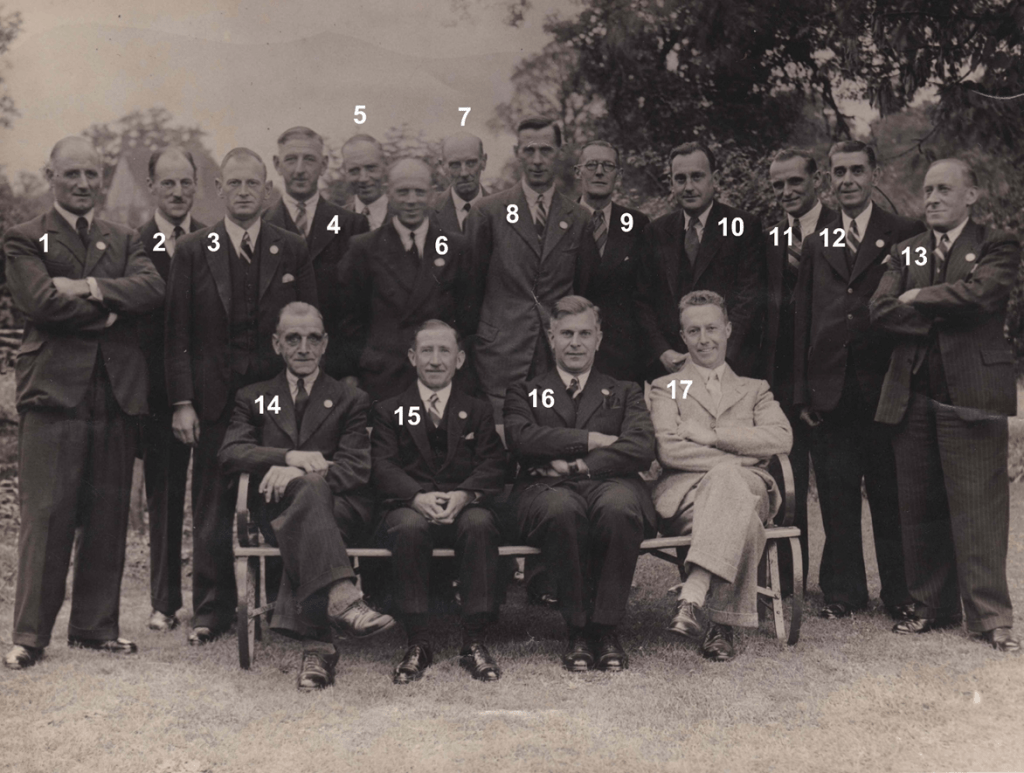
This photo was taken in front of Mill House, Betts Lane, the home of Jimmy Savage’s parents and sister. Buttfield can be seen in the background. We believe it to be the Observer Corps, perhaps after the war: 2, Fred Weare whose son Henry died in the rocket. 4, Fred Myson. 8, George Crowe. 9, Peter Banson. 11, Jack Traveller. 12, Arthur Dellar. 14, George Cordell. 15, Jimmy Savage who lived at the Mill Cottage. Can you help in identifying some of the others?
You can contact us via https://www.facebook.com/nazeinghistoryworkshop or https://nazeinghistory.org/publications/
Jimmy Savage had been the golf professional at Nazeing Golf club on Nazeing Common. The club was established in 1890 by the then vicar Thomas Goddard and Ralph Palmer, who was treasurer of Nazeing Wood or Park. In 1902 it was described as probably one of the best links within 20 miles of London by Kelly’s Directory. The Golf Course was ploughed up for food production as part of the war effort. You will be able to learn about that in the next blog about the Women’s Land Army.
Seventeen Miles from Town. – The History of Nazeing part 2 has a chapter about all the sports and other activities in the village which is available from EFD Museum in Waltham Abbey or directly from Nazeing History Workshop at just £10. Contact us via https://www.facebook.com/nazeinghistoryworkshop or https://nazeinghistory.org/publications/
ARP (Air Raid Precautions)
The ARP warden’s duties were varied and included: ensuring the blackout was observed, sounding air raid sirens, issuing and checking gas masks, evacuating areas around unexploded bombs, rescuing people where possible from bomb damaged properties, locating temporary accommodation for those who had been bombed out, reporting to their control centre about incidents, calling in other services if required.
There were three Warden Posts in Nazeing, all manned by volunteers:
B9 at Old Sun Cottage, Nazeing Common, B10 at Crooked Billet, Middle Street , B11 in Riverside , at Ecclesbourne.
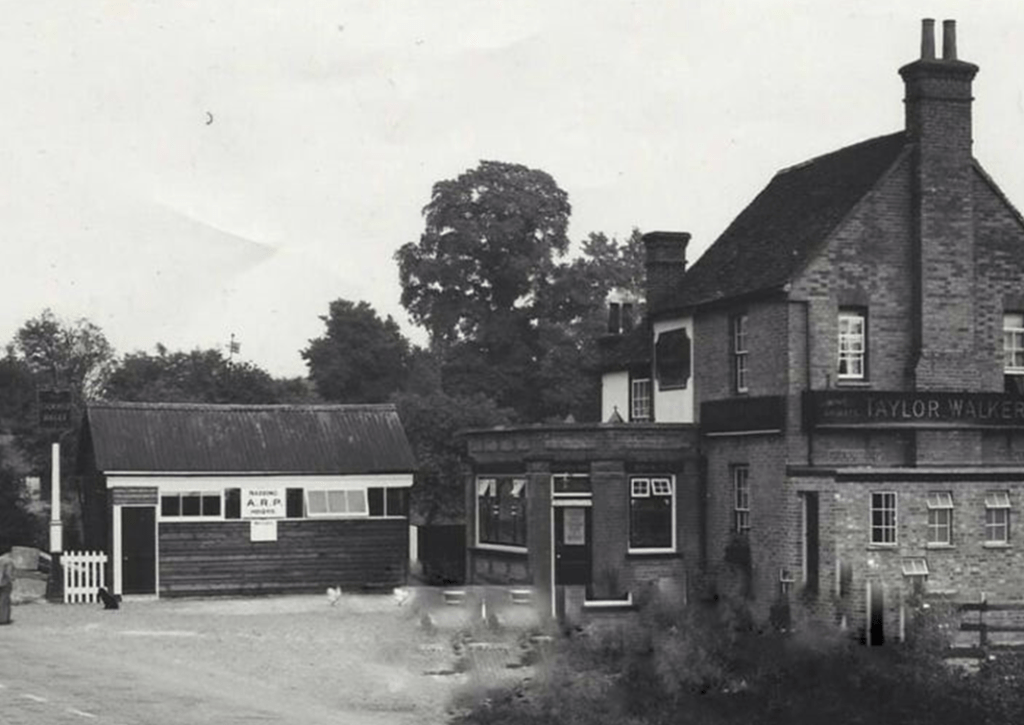
The Crooked Billet Pub in Middle Street, ARP Warden Post B10 with sign on the side.
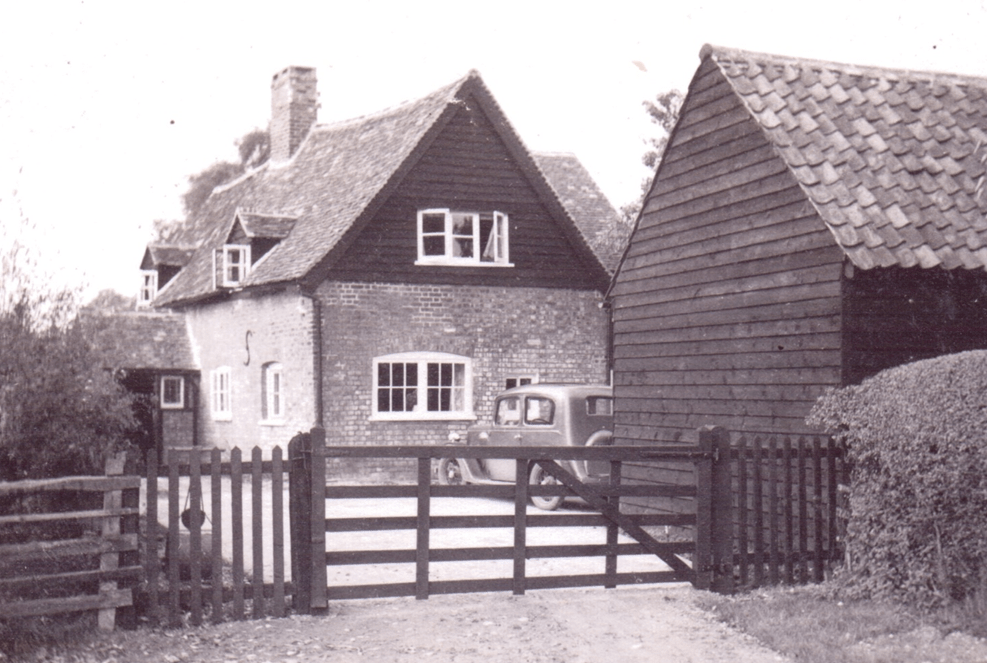
Old Sun Cottage, next door to The Sun Pub, was ARP Warden Post B9.
The 1939 register listed 46 Individuals in some sort of ARP service. The senior warden was Leonard Archer from Church Mead. Females were only listed as British Red Cross, First Aid or Ambulance drivers such as 26 yr old Ailine Andrew from Betts Lane. Some Nazeing residents were in service elsewhere such as their place of work.
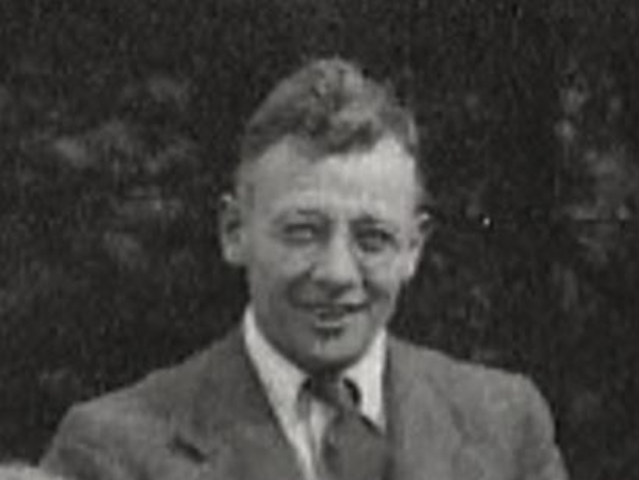
Leslie Tubby, ARP Warden at B9 – The Old Sun House
The 1939 Register listed 9 yr old Robert Tubby’s father, Leslie, as a Shipping Clerk and ARP Warden. He was in charge of ARP Warden’s post B9 at Old Sun House. Leslie wasn’t born in the village. He married Beatrice Jacobs who was living at Greenleaves, Hoe Lane. They were married at All Saints, Nazeing in 1928. Leslie’s wife , Beatrice became a warden in 1940.
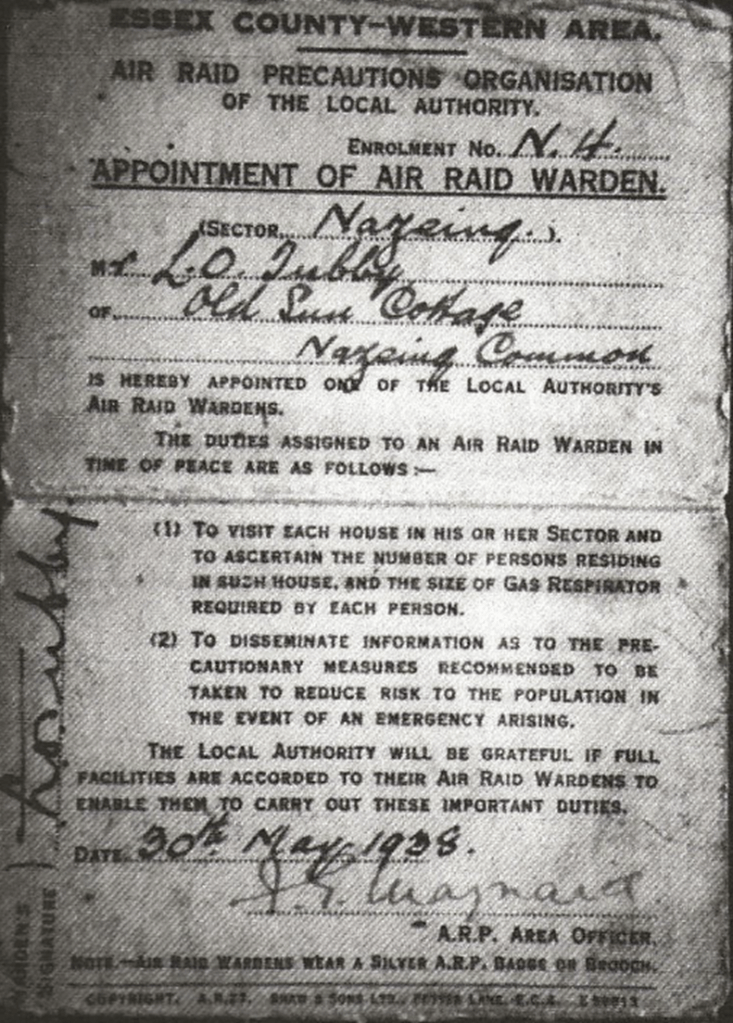
Leslie Tubby’s well-worn ARP identity card showing he was enrolled in May 1938.
The observation point was behind the house towards the church and made of sand bags covered in green turf. There was a system of markers showing points of the compass, so they were able to quickly record the bearings of bomb explosions or other events.
Other ARP posts had similar; laying bearings from each gave a position of damage so rescue could be dispatched.
Members of post B9 were: Leslie and Beatrice Tubby, Bert Hollow, who farmed near the corner of Back Lane and Betts Lane at the triangle pond, Bert’s brother, Arthur, and farm hands. This made it easier to arrange watches and sleep patterns.
According to Robert; all these men had been to school together and played tricks on his father, like drawing the short straw to sit all night, next to the unexploded bomb at the top of Hoe Lane, while they retired to a safe distance until the bomb disposal team arrived. This was on the 30th November 1944 according to the vicar’s records.
Robert also told us: After Crete fell, we expected an airborne invasion, it was Monty Hargreaves’ shot gun that stood inside our front door for the rest of the war, our final line of defence. I was told look after your mother.
Home Guard
The Home Guard was originally formed as the Local Defence Volunteers in 1940 and was responsible for guarding coastal areas, factories and other locations from invasion.
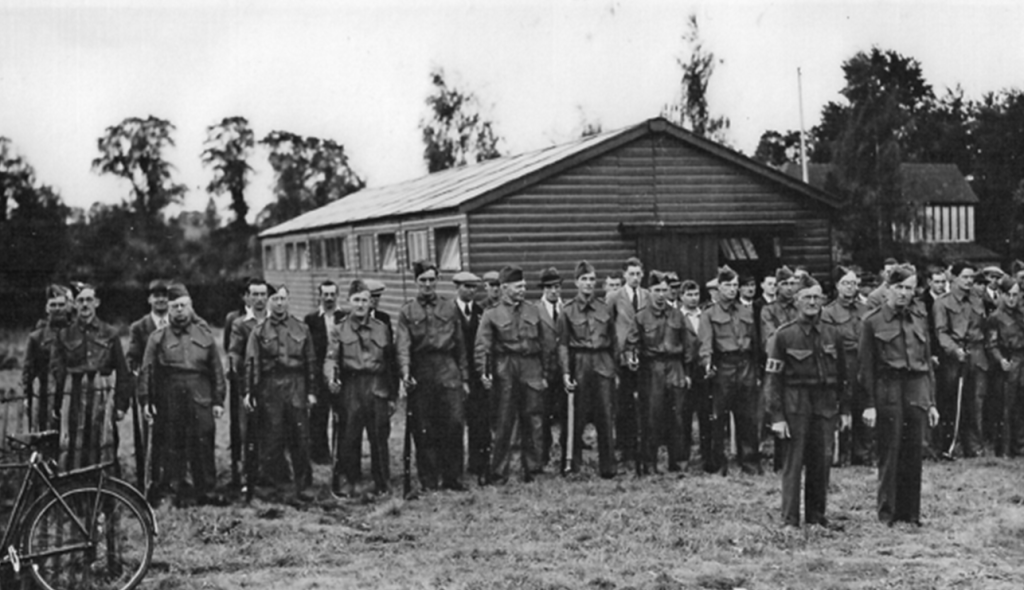
The cadet hut was built close to Oak Porch House in Western Road, home of the Commander Sidney Taverner. It was demolished soon after the war.
As you can see from the photo, those too old, too young or excused from the military did their bit in the village Home Guard unit.
Members of the Home Guard would be on lookout from the church tower, with its good view south and west over the valley as far as the Wembley Arch on a good day, as well as north and east over what is now called Harlow, but was then the villages of Netteswell, Little and Great Parndon, as well as Roydon.
Dennis Mead was the proud owner of a motor bike. He lived in Bumbles Green, next to the Welch’s garage where he could repair it. He joined the Home Guard and became a messenger. As a result, he got an extra petrol ration. He was also issued with a rifle. Along with his friend Gordon they would ride to Hare Street in Parndon. During the Battle of Britain (10 July to 30 Oct 1941), Dennis remembers lying under a large oak tree at the top of Hare Street watching the dog fights above. This was close to Parndon Hall, now the site of Princess Alexander Hospital, on 4th Avenue, Harlow. Whenever he passed that tree, which sadly is no longer there, he would tell the author of this blog, his daughter, about it. He was just a 16-year-old lad, but he had a clear memory of this well into his eighties.
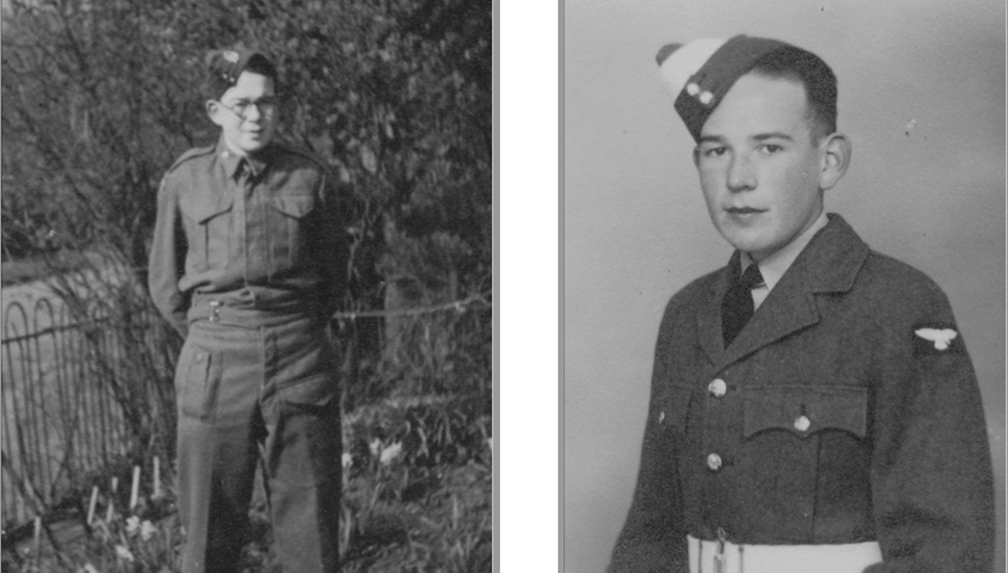
Dennis Mead in his Home Guard uniform and in his R.A.F. uniform in 1947 while stationed at Scarborough.
Dennis joined the R.A.F. and trained as a Spitfire pilot in Southern Rhodesia, now Zimbabwe. He was ready to fly to Asia to join the war effort, at just 20 years old, when the war ended in August 1945. He never wore his campaign medals, saying he never saw active service. They remained wrapped in the box as he received them.
Were any of you family in the Home Guard, ARP or Observer Corps in our village of Nazeing? We would love to hear their stories. You can contact us via https://www.facebook.com/nazeinghistoryworkshop or https://nazeinghistory.org/publications/
Look out for our next blog, we will be telling you about the Land Army Girls and Prisoners of War that came to the village. Many stayed to make Nazeing their home.
 Nazeing History